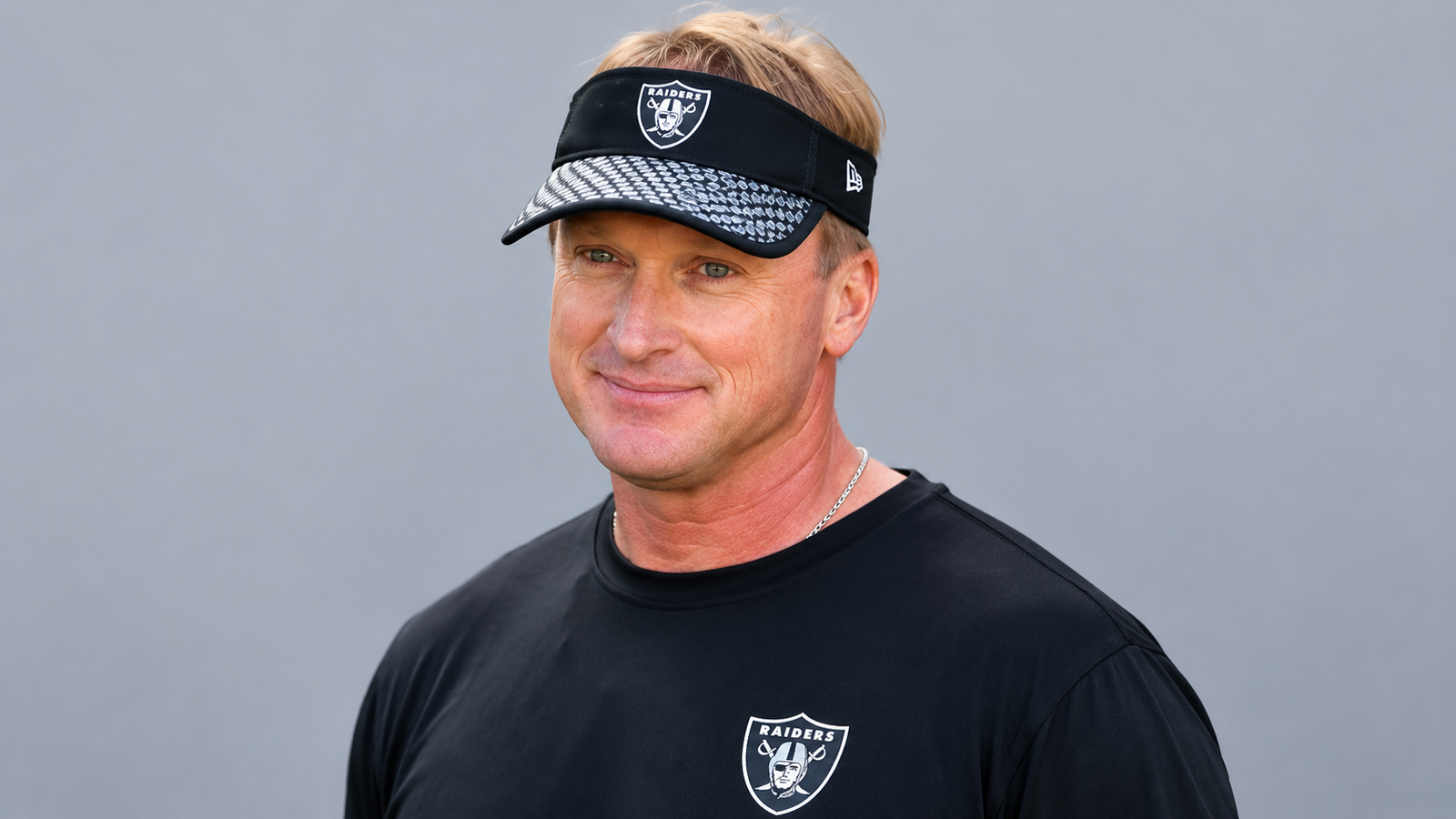
Jon Gruden is one of the most recognizable and controversial figures in modern American football. Known for his intense coaching personality, deep offensive knowledge, and larger-than-life media presence, he built a career that spans college football, multiple NFL franchises, a Super Bowl championship, and a high-profile broadcasting role. His journey reflects both elite success and significant controversy, making him one of the most discussed NFL coaches of the last three decades.
From his early beginnings as a football-obsessed coach’s son to becoming a Super Bowl-winning head coach, Gruden’s story is deeply tied to the evolution of NFL offensive football. His coaching identity, leadership style, and later media career all contributed to a legacy that remains widely debated in sports culture.
Early Life, Family Background, and Football Foundation
Jon David Gruden was born on August 17, 1963, in Sandusky, Ohio, into a family where football was more than just a sport—it was a way of life. His father, Jim Gruden, worked as a football scout and coach, which exposed Jon to the game at an early age. This environment played a crucial role in shaping his understanding of strategy, discipline, and preparation.
Growing up in a football-driven household, Gruden developed a strong interest in playbooks, game planning, and quarterback mechanics. Unlike many players who transition into coaching after playing careers, Gruden’s coaching mindset developed early through observation and study. This gave him a unique advantage in understanding football systems from a tactical perspective.
His upbringing also built his competitive personality. Friends and teammates often described him as highly focused, energetic, and obsessive about details—traits that later became trademarks of his coaching career.
College Football Journey and Early Coaching Development
Jon Gruden attended the University of Dayton, where he was a backup quarterback. Although he did not have a standout playing career, his time as a player helped him understand offensive systems from the perspective of a quarterback. This experience later influenced his coaching philosophy, particularly his focus on quarterback development.
After graduating, Gruden immediately transitioned into coaching. He took assistant roles at various colleges, including graduate assistant positions where he worked closely with offensive coordinators and quarterbacks. These early roles were critical in developing his technical understanding of passing schemes, route combinations, and defensive reads.
During this phase, Gruden built his reputation as a young coach with an unusual level of intensity and preparation. He spent long hours studying film and designing practice scripts, which set him apart from many of his peers. His early career established the foundation for his future success in the NFL.
Entry into the NFL and Rise as an Offensive Strategist
Jon Gruden’s entry into the NFL came through assistant coaching positions, where he quickly gained attention for his offensive creativity. One of his most important early NFL roles was with the Philadelphia Eagles, where he served as an offensive coordinator. In this position, he helped modernize the passing game and improve quarterback performance through simplified reads and aggressive play designs.
His success with the Eagles opened doors to additional opportunities, including coaching roles with the Green Bay Packers and San Francisco 49ers. In San Francisco, he worked under experienced coaching staff and learned advanced offensive systems that blended West Coast principles with evolving NFL trends.
These experiences helped Gruden build a reputation as a rising offensive mind. By the late 1990s, NFL executives viewed him as one of the league’s most promising young coaches, especially for his ability to develop quarterbacks and design adaptable offensive systems.
Oakland Raiders Head Coaching Breakthrough
Jon Gruden’s first major head coaching opportunity came in 1998 when he was hired by the Oakland Raiders. At just 34 years old, he became one of the youngest head coaches in the NFL. Despite his age, Gruden quickly established authority through his intense leadership style and detailed preparation methods.
Under Gruden’s leadership, the Raiders became one of the AFC’s most competitive teams. He helped rebuild the team’s offensive identity, working closely with veteran players and developing a strong passing attack. Quarterback Rich Gannon flourished under his system, eventually becoming an MVP-caliber player.
Between 1998 and 2001, the Raiders consistently reached the playoffs and became known for their aggressive offensive style. Gruden’s success in Oakland established him as one of the top young coaches in the league and set the stage for one of the most unusual coaching moves in NFL history.
Super Bowl Championship with the Tampa Bay Buccaneers
In 2002, Jon Gruden was traded to the Tampa Bay Buccaneers in a groundbreaking NFL deal. The Buccaneers paid multiple draft picks and significant compensation to acquire him, making him one of the most valuable coaching assets in league history at the time.
Gruden’s impact in Tampa Bay was immediate and historic. In his first season, he led the Buccaneers to a dominant defensive and offensive balance that resulted in a Super Bowl XXXVII victory over the Oakland Raiders. This win made him the youngest head coach to win a Super Bowl at the time, solidifying his place in NFL history.
The victory was especially significant because it came against his former team. Gruden’s deep understanding of the Raiders’ offensive system played a key role in Tampa Bay’s defensive game plan, which is often cited as one of the most strategically impressive Super Bowl performances ever.
Coaching Philosophy, Leadership Style, and Football Identity
Jon Gruden became widely known for his intense, detail-oriented coaching philosophy. He emphasized repetition, film study, and precision execution in every aspect of the game. His offensive systems were built around timing, rhythm passing, and quarterback decision-making.
Players who worked under Gruden often described him as demanding but highly knowledgeable. He expected complete commitment from his team, both physically and mentally. His practices were known for being long, structured, and highly detailed, with constant corrections and adjustments.
Gruden’s leadership style also included emotional intensity. On the sidelines, he was famous for his passionate reactions, energetic coaching presence, and constant communication with players. While some viewed this as motivating, others saw it as overly intense, reflecting the dual perception of his coaching identity.
ESPN Career, Media Fame, and QB Development Influence
After leaving coaching in 2008, Jon Gruden transitioned into broadcasting with ESPN. He became the lead analyst for Monday Night Football, where his enthusiastic personality and deep football knowledge made him one of the most recognizable voices in sports media.
During his ESPN tenure, Gruden developed a cult following through his detailed film breakdowns and energetic commentary. One of his most popular contributions was “Gruden’s QB Camp,” a segment where he worked individually with college quarterbacks preparing for the NFL Draft. This program highlighted his expertise in quarterback development and offensive strategy.
His media career helped reshape his public image. While some critics viewed him as overly dramatic, many fans appreciated his passion and deep understanding of football mechanics. His time in broadcasting kept him closely connected to NFL trends and emerging quarterback talent.
Return to the Raiders and High-Profile Coaching Contract
In 2018, Jon Gruden made a dramatic return to the NFL as head coach of the newly relocated Las Vegas Raiders. His return came with one of the largest coaching contracts in sports history, reportedly valued at around $100 million over ten years.
Expectations for his second tenure were extremely high. The Raiders were rebuilding and needed strong leadership to become competitive again. Gruden focused on reshaping the roster, improving offensive schemes, and developing a long-term team identity.
However, the results were inconsistent. While the team showed moments of progress and reached the playoffs in the 2021 season, overall performance fluctuated. Critics questioned his roster decisions, offensive consistency, and long-term planning strategy.
Controversy, Resignation, and NFL Email Scandal
In 2021, Jon Gruden’s career took a dramatic turn when leaked emails revealed offensive and controversial language he had used over several years. The messages included racist, homophobic, and misogynistic remarks, which led to widespread criticism across the NFL and public.
The controversy escalated quickly, placing significant pressure on both Gruden and the Raiders organization. As scrutiny increased, Gruden resigned from his position as head coach in October 2021, ending his second NFL coaching tenure abruptly.
The incident sparked major discussions about workplace culture in the NFL, accountability standards, and the long-term impact of private communications becoming public. It also significantly affected Gruden’s legacy in professional football.
Read more: Jon Gruden
Legacy, Impact on NFL Coaching, and Modern Reputation
Jon Gruden’s legacy in the NFL remains complex and highly debated. On one hand, he is recognized as a Super Bowl-winning coach who significantly influenced offensive football strategy and quarterback development. His systems, teaching style, and attention to detail helped shape modern offensive coaching approaches.
On the other hand, his career is also defined by controversy and the circumstances surrounding his resignation. This dual legacy makes him one of the most polarizing figures in recent NFL history. Analysts continue to debate his overall impact on the game, balancing his coaching achievements with his off-field issues.
Despite the controversy, Gruden’s influence on quarterback training, offensive schemes, and football media remains significant. His name continues to appear in discussions about coaching excellence, media influence, and NFL culture.
Conclusion: The Complex Story of Jon Gruden’s Football Career
Jon Gruden’s journey through football is a story of both remarkable success and significant controversy. From his early coaching days to winning a Super Bowl and becoming one of the most famous NFL personalities, he built a career defined by intensity, innovation, and passion for the game.
At the same time, his legacy is complicated by actions that led to his resignation and changed public perception of his career. This duality ensures that Gruden remains a widely discussed figure in football history, representing both the heights of coaching achievement and the consequences of personal controversy.
Ultimately, Jon Gruden’s story reflects the complexity of modern sports culture, where success, media presence, and accountability all intersect in shaping how a legacy is remembered.