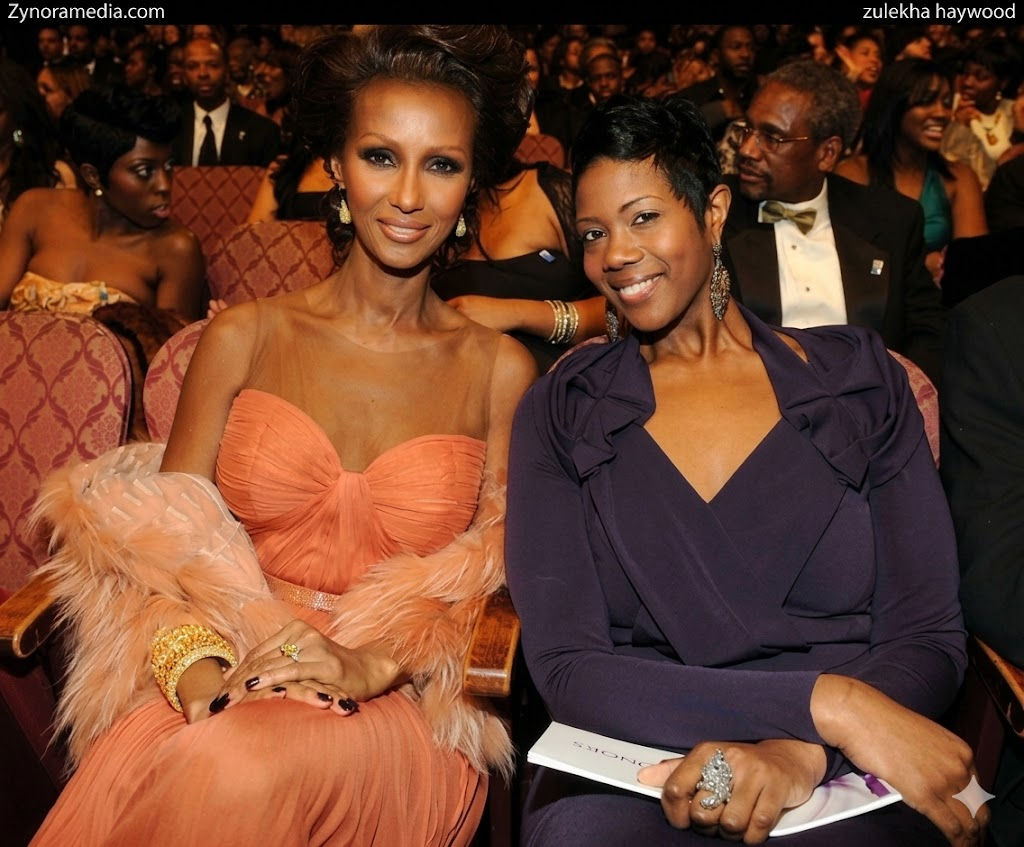
Zulekha Haywood is a name that resonates with many who follow stories of identity, perseverance, and personal transformation. She is widely recognized as the daughter of iconic supermodel Iman and celebrated NBA player Spencer Haywood, yet her life is far richer and more complex than just her family background. Zulekha’s journey encompasses challenges with self‑image, a thoughtful pursuit of education and career, deep personal growth, and an intentional life built around purpose rather than public perception. Today, she represents something far greater than inherited fame: she stands as a story of resilience, self‑discovery, and the power of redefining success on one’s own terms.
In this comprehensive article, we explore Zulekha Haywood’s early years, her experiences with identity and self‑worth, her academic and professional life, her journey toward health and emotional strength, her family and personal relationships, and the legacy she continues to cultivate. This is a story rooted in reality, informed by credible sources, and told in a way that honors Zulekha as a person—not simply as someone related to famous parents. Throughout the article, we integrate related keywords such as Zulekha Haywood biography, personal transformation, legacy and identity, professional accomplishments, body image journey, self‑acceptance, and personal growth to ensure the content is rich, accurate, and optimized for readers seeking trustworthy insight.
Early Life and Family Background
Zulekha Haywood was born on July 5, 1978, into a family already deeply enmeshed in public life. Her mother, Iman Mohamed Abdulmajid, known professionally as Iman, is one of the most iconic supermodels in fashion history. Iman’s breathtaking presence on runways and magazine covers throughout the 1970s, 80s, and beyond made her a global symbol of beauty, elegance, and professionalism. Her father, Spencer Haywood, established a legendary reputation in the world of professional basketball, earning accolades that included Olympic competition and later induction into the Basketball Hall of Fame. Growing up at this crossroads of fashion and sports, Zulekha was exposed to excellence and achievement from day one.
Despite the prominence of her parents, her early life was not defined solely by glamour and achievement. Zulekha’s childhood was shaped by complexity and change, including the divorce of her parents when she was still young. This shift in family structure introduced her to blended family dynamics early in life, as she gained half‑siblings from both her mother’s and father’s later relationships. The experience of family expansion and transition became an early lesson in adaptability and emotional complexity—an experience many children face but few have to navigate under public scrutiny.
Early in her childhood, Zulekha began to notice how society placed intense emphasis on appearances, and how public perception often overshadowed internal reality. Being the child of a supermodel and an elite athlete meant that expectations, both spoken and unspoken, hovered around her identity. From an early age she understood that the world saw her through a particular lens—one colored by glamour, success, and visibility. Yet the lens she developed for herself was grounded in a far deeper and more personal understanding of who she wanted to become.
Struggles with Body Image and Identity
Growing up with two parents whose lives revolved around aesthetics and peak physical performance created unique internal pressures for Zulekha. From an early age, she struggled with body weight and self‑image. Unlike the slender forms celebrated on runways and the athletic physiques revered in professional sports arenas, Zulekha’s body did not conform to the dominant cultural narratives she observed around her. As she later candidly acknowledged, these differences often left her feeling insecure and uncertain about her place in the world.
Her struggles were not merely cosmetic; they were deeply tied to self‑worth and emotional well‑being. As she navigated adolescence, the comparison to her mother’s physical grace and her father’s athletic prowess became an internal narrative that weighed heavily on her sense of self. Like many young people, she was learning how to see herself, but this process occurred under an amplified spotlight that intensified feelings of inadequacy. The external world seemed to celebrate bodies like her parents’, while it did not celebrate hers in the same way.
This chapter of Zulekha’s life speaks to a universal human experience—feeling insufficient in comparison to others—yet it also highlights the unique emotional landscapes that children of famous individuals often navigate. While public attention can be a privilege, it also invites comparison, expectations, and emotional friction that many people rarely discuss. Zulekha’s early encounters with body image issues and identity challenges laid a foundation for her later work in understanding self‑acceptance and intentional living.
Education and Personal Foundations
Despite the emotional challenges she faced during her youth, Zulekha demonstrated a deep commitment to personal development and intellectual growth. Her academic journey became a source of purpose and direction that allowed her to forge an identity outside of her parents’ renown. She attended Mercy High School, a place that provided structure and academic focus, allowing her to build confidence and discipline in areas unrelated to public image.
Her pursuit of higher education at Michigan State University marked a significant turning point. Choosing to major in Human Resource Management was a thoughtful decision that hinted at her emerging interests: understanding people, systems, organizational behavior, and the important intersections between human potential and structured environments. This choice positioned her toward a career where critical thinking, empathy, and strategic insight were far more important than appearance or public persona.
During her university years, Zulekha honed essential intellectual skills that would shape her professional trajectory. She became deeply engaged in coursework involving organizational dynamics, leadership behavior, strategic planning, and financial understanding—areas that would later enable her to navigate the corporate world with confidence and competence. At Michigan State, she not only gained academic knowledge but also began crafting a personal identity rooted in professionalism, agency, and forward‑thinking ambition.
Education offered her a lens through which she could view the world differently—not as an extension of celebrity, but as a space for substantive achievement, self‑determination, and long‑term growth. It became a foundational chapter in her life story, one marked by intentional choice rather than inherited expectation.
Professional Journey and Career Development
Following her academic success, Zulekha embarked on a professional journey characterized by steady growth, strategic movement, and meaningful contribution. Rather than pursuing a career aligned with the world of entertainment or modeling, she entered the corporate sphere, bringing with her the analytical acuity and thoughtful discipline she had cultivated in school.
She began her professional career at Iman Cosmetics, the beauty company her mother founded, holding positions that provided her with direct experience in finance, analytics, and strategic operations. Starting as an accountant, she quickly demonstrated not only technical competence but also a deep work ethic and team‑oriented mindset. Over time she moved into roles such as account manager, revenue planning manager, and in later stages, senior operational roles.
Her tenure at Iman Cosmetics allowed her to understand the inner workings of a business that operated in a largely competitive industry. She learned how brands plan for growth, manage financial forecasting, align distribution strategies, and integrate market insights into day‑to‑day decision‑making. Her work in demand planning and revenue forecasting deepened her expertise in the business lifecycle—from concept to consumer.
Not content to limit her professional life to her mother’s company, Zulekha went on to assume roles outside the world of cosmetics, including senior business analyst and brand manager positions at other reputable organizations. Her career eventually expanded to include strategic sourcing analyst roles and inventory analysis, where she leveraged her skills in data analysis, systems optimization, and cross‑functional collaboration. She demonstrated the ability to translate analytical insight into actionable business outcomes—an accomplishment few achieve early in their careers.
This trajectory reflects not only professional competence but also intentional career crafting. Zulekha Haywood made choices that aligned with her strengths, interests, and long‑term goals, rather than relying on familial fame or public visibility. Her career becomes an embodiment of the principle that legacy can be leveraged—not as a crutch, but as a platform from which to build independent achievement.
Personal Transformation and Health Journey
In her late twenties, Zulekha embarked on a deeply personal chapter that would transform not just her physical health, but her emotional and psychological relationship with herself. After years of grappling with body image challenges and emotional struggle, she opted for a gastric band surgery—a decision rooted in her desire to reclaim control over her life, health, and self‑confidence.
This choice was not made lightly. It represented a profound internal turning point—a refusal to remain trapped in old patterns and a willingness to embrace difficult change. Surgical weight loss became a catalyst for broader transformation, enabling her to experience not only physical change, but also a deeper sense of self‑acceptance, emotional balance, and personal agency.
What makes Zulekha’s journey especially inspiring is not simply the physical transformation itself, but the honesty with which she confronted a lifelong challenge. In a world that often equates worth with appearance, she chose to address her struggle not for external validation, but for her own inner well‑being. She underwent thoughtful reflection, professional consultation, and emotional readiness, ultimately emerging with a renewed sense of purpose and clarity.
Her evolution speaks to resilience, self‑compassion, and intentional living. Rather than allowing her past difficulties to define her, Zulekha used them as inflection points—moments that propelled her toward a life of greater authenticity and self‑respect. Her story serves as an important example of how personal growth and well‑being often require courage, vulnerability, and sustained commitment.
Family Life and Personal Relationships
Beyond her professional and personal development, Zulekha Haywood has built a deeply intentional and fulfilling family life. In 2016, she married Jason Young, marking the beginning of a new chapter characterized by partnership, love, and family commitment. The couple welcomed their daughter, Lavinia Rose Young, in 2017, bringing profound joy and purpose to their lives.
Zulekha’s approach to family life is marked by intentionality and privacy. Unlike many public figures, she chose to keep her personal and family life out of the headlines, cultivating a space where relationships could flourish free from undue public scrutiny. Her commitment to nurturing a stable, supportive family environment reflects a deep understanding of what matters most in life: connection, love, and shared experience.
Her role as a mother and spouse goes beyond conventional narratives; it embodies her broader life philosophy—living with purpose, humility, and attention to what truly matters. She has consistently emphasized emotional well‑being, deep presence, and thoughtful engagement with those she loves, creating a home environment grounded in care and mutual support.
This chapter of her life highlights her capacity for heartfelt relationships and illustrates how personal fulfillment often emerges not from public applause, but from quiet, meaningful bonds rooted in shared life experience.
Read More : Zulekha Haywood Biography: Life, Career & Personal Journey
Legacy, Identity, and Influence
Zulekha Haywood’s life story defies simplistic categorization. She is neither defined solely by her parents’ fame nor limited by her early struggles. Instead, she has built an identity grounded in resilience, purpose, and thoughtful self‑authorship. Her journey invites reflection on what it means to live intentionally in a world that often rewards surface visibility over substantive depth.
Her legacy is not measured by magazine covers or athletic championships, but by the ways in which she has navigated challenges with courage, forged a career with integrity, and embraced personal transformation with honesty. She stands as a reminder that identity is not static—it is crafted through choices, reflection, and a sustained commitment to growth.
In a cultural landscape increasingly focused on authenticity, self‑acceptance, and emotional well‑being, Zulekha’s story resonates with those who seek to define success on their own terms. Her life offers powerful insights into how internal resilience and purpose can eclipse external comparison and expectation. Rather than seeking approval from the world, she chose to cultivate a life rooted in inner truth—a lesson that holds universal relevance.
Conclusion: A Story of Self‑Discovery and Purpose
Zulekha Haywood’s life narrative is a testament to the power of self‑discovery, resilience, and intentional living. From her early years shaped by family complexity and identity questions, through her academic achievements, professional accomplishments, personal health transformation, and family life, she has consistently chosen growth over comfort and authenticity over assumption.
Her journey reminds us that legacy can be a beginning—not a burden—and that personal worth is always best measured from the inside out. She stands as an example of how individuals can navigate life’s challenges with depth, integrity, and courage, and in doing so, create a legacy that reflects not what we inherit, but what we choose to build.
Zulekha Haywood’s story is not simply about transformation—it is about reclaiming self‑determination, honoring inner truth, and living a life that reflects the fullness of human experience. In a world that often privileges image over substance, her life remains a powerful reminder that the deepest beauty lies in authenticity, resilience, and purposeful living.
5.5 Thinking